Last updated: October 28, 2026
Bunny lines are creases that can appear beside or across the nose when you scrunch it. Bunny line Botox may temporarily soften those expression-related creases by relaxing the muscles that contribute to them, but the location of the lines matters as much as the dose. Adults traveling from Odessa can discuss Botox treatment at Botox In Midland at our clinic in Midland, Texas.
What are bunny lines, and can Botox soften them?
Bunny lines are expression-related creases that can appear along the sides of the nose or across its bridge when you scrunch it. Botox can temporarily reduce the muscle movement behind those creases and may make them less noticeable. Lines that deepen when you frown, or remain visible when your face is still, need a separate assessment.
What are the wrinkles across the bridge of my nose?
Horizontal lines across the nasal bridge may also be called bunny lines when they appear as you scrunch your nose. Wrinkles higher on the bridge or between the brows that deepen when you frown may instead be frown-related. We look at where each line sits and whether scrunching or frowning brings it out before recommending treatment.
Can Botox help nose lines that remain visible at rest?
Botox works on muscle-driven movement, so a crease that remains visible when your nose is relaxed may not smooth to the same degree. An article on the American Society of Plastic Surgeons’ site notes that deeper lines can remain even when the contributing muscle is relaxed. If a line persists, we can assess whether a different approach, such as filler for an appropriate crease, might help rather than adding more Botox; not every persistent nose line is suitable for filler. Our guide to expression lines versus persistent wrinkles explains why that distinction shapes expectations.
Why does injection placement matter for bunny line Botox?
Placement matters because similar-looking nose creases can involve different muscles, including the nasalis and nearby muscles. A qualified injector assesses where each crease forms and how the nose moves before planning treatment. Precise placement and appropriate dosing work together; a unit count alone cannot identify the muscle responsible for a particular line.
Where is Botox injected for bunny lines?
For typical side-of-nose bunny lines, an injector considers the nasalis muscle, then checks whether nearby muscles contribute to the visible pattern. The 2022 anatomical guidelines by Yi and colleagues assess the nasalis, procerus and levator labii superioris alaeque nasi muscles to support more precise nose-region treatment. Those guidelines provide anatomical context, not a universal injection point for every face. The paper “Where Should We Inject Botulinum Toxin for the Bunny Lines?” also examines injection placement; it does not replace an individual examination.
Why might one side of the nose respond differently?
Nose movement and crease patterns are not necessarily identical on both sides. In clinical practice, watching a patient scrunch, smile and relax is more informative than assuming that matching marks require an identical plan. Unintended effects on nearby muscles can also change the appearance of a result, which is why careful assessment matters.
Who is a good candidate for bunny line Botox?
An adult whose nose creases appear mainly with expression may be a candidate for bunny line Botox. An assessment should confirm that muscle movement is driving the concern, review relevant health and injection history, and establish whether subtle softening is realistic.
What should an injector check before recommending treatment?
The injector should look at your nose at rest and while it moves, note any lines that persist without movement, and ask about previous facial injections and relevant medical history. That examination helps separate a likely muscle-driven crease from a line that Botox may not fully address.
The FDA has approved Botox for frown lines, forehead lines and crow’s feet, but not bunny lines. An article by Terence Myckatyn, MD, on the American Society of Plastic Surgeons’ site describes bunny line Botox as an off-label cosmetic use.
How many units of Botox are needed to treat bunny lines?
There is no single dose for bunny lines. An American Academy of Ophthalmology article on cosmetic botulinum toxin notes that midface injections generally use 1–4 units per site; that is not a prescribed dose for bunny lines. We determine a plan from the strength and location of muscle activity, the pattern on each side of your nose, and previous treatment. Units cannot substitute for accurate placement.
How does an injector decide on an individualized dose?
The injector evaluates which movements create the lines and whether prior treatment changed those movements. That assessment guides both the amount considered and the muscles selected. Figures used for frown lines describe a different treatment area and should not be transferred to the nose.
What happens at a bunny line Botox appointment and afterward?
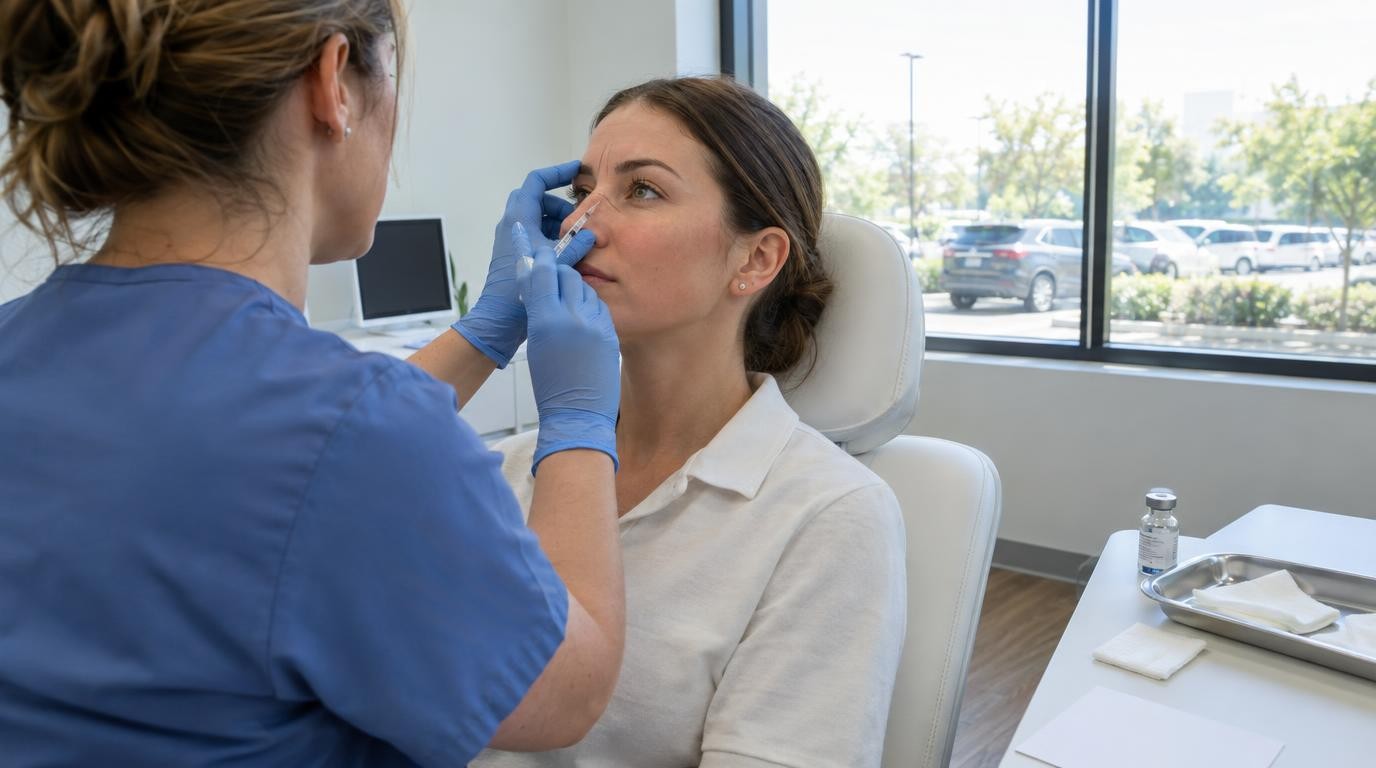
We assess your nose movement and, if you decide to proceed, use a fine needle to inject the selected muscles; mild redness or swelling may follow. Our first Botox treatment generally takes 30 to 60 minutes, though the length of a bunny-line visit depends on the assessment and whether we treat other areas.
What happens before and during the injections?
- Consultation: We discuss your concern and examine how your nose moves, so the proposed treatment matches the creases you want assessed.
- Recommendation and consent: You can review the expected degree of softening, limitations and risks before deciding whether to proceed.
- Injection: If you consent, the injector uses a fine needle to treat the selected muscles. A follow-up Botox treatment generally takes about 15 minutes.
What might you notice immediately after treatment?
You may feel mild discomfort or see redness, swelling or small bumps at the injection sites. Small red bumps generally fade within 15 to 20 minutes, while bruising can last up to a week. There is generally little to no downtime, but you should not expect the wrinkles to look fully softened immediately. For more recovery guidance, see our Botox aftercare information.
How long until I see results from Botox for bunny lines?
Botox results for nose lines are not immediate: you may start to see a change after two to three days, with a clearer result over the first week and fuller results after about two weeks. Bunny line results vary, and lines visible at rest may still show after muscle movement decreases.
How long do bunny line Botox results last?
Our Botox treatments generally last four to six months, although bunny-line results may differ. Mayo Clinic’s general Botox guidance says effects may last three to four months, depending on the problem treated. As the effect wears off, muscle movement and lines may return; our Botox results timeline offers more context for evaluating change over time.
What are the risks of bunny line Botox, and who should avoid it?
Bunny line Botox can cause temporary injection-site effects, headache or an uneven result. Avoid treatment if you have a known allergy to a botulinum toxin product or its ingredients, or an infection at the proposed injection site; we also advise postponing treatment while trying to conceive, during pregnancy or while breastfeeding. Serious complications are rare, but symptoms suggesting a serious allergic reaction or toxin spread need urgent medical attention. Discuss your health history and individual risks with your own qualified clinician before deciding on treatment.
What side effects should you discuss with your injector?
Redness, swelling, discomfort and bruising can occur where the needle enters the skin; a mild headache is also possible. An uneven result or unwanted change in a nearby expression, such as an uneven smile, is less common but important to discuss. Eyelid drooping is also possible if Botox affects nearby muscles, although it is not a typical bunny-line outcome. Seek urgent medical care for trouble breathing, swallowing or speaking, or symptoms of a serious allergic reaction. The BOTOX Cosmetic prescribing information addresses serious risks, including hypersensitivity and toxin effects beyond the intended area.
When should you postpone or avoid Botox?
Do not receive Botox if you have a known allergy to a botulinum toxin product or any of its ingredients, or an infection at the proposed injection site. Tell the injector about allergies, medical conditions, medications and prior reactions before treatment. At Botox In Midland, we also advise against Botox while trying to conceive, during pregnancy or while breastfeeding. Our approach to these situations is clinic advice, not a claim that each is a labeled contraindication.
What if nose lines appeared after Botox elsewhere on your face?
Nose scrunching may become more noticeable after Botox relaxes muscles elsewhere on the face, but a new or more visible line does not automatically call for another injection. An injector should observe the movement and identify the responsible muscles before recommending treatment. Lines running from the nose toward the mouth are a different concern.
Can you get rid of nasolabial folds with Botox?
Botox may temporarily soften a nasolabial fold when a specific muscle contributes, but it generally cannot eliminate deep folds driven mainly by volume loss or tissue laxity. Nasolabial folds extend from the sides of the nose toward the corners of the mouth; bunny lines form on or beside the nose during expression. The Cleveland Clinic’s overview of nasolabial folds notes that Botox may help when a specific muscle contributes to a fold, while dermal fillers can restore volume and fullness.
The cause of a crease near the nose affects which approach may help:
| Concern | Approach | What to expect |
|---|---|---|
| Bunny lines that appear with nose movement | Botox | May temporarily soften movement-driven creases but may not erase lines visible at rest. |
| Nasolabial folds partly caused by a specific muscle | Botox | May reduce the fold’s appearance for a few months; it does not replace lost volume. |
| Nasolabial folds related to lost volume | Dermal filler | Can add fullness rather than relax a muscle. |
Frequently Asked Questions
Can I touch my nose or lie down after bunny line Botox?
Avoid rubbing or massaging the treated area for 24 hours, and avoid lying down for 2 to 4 hours after injections, according to Mayo Clinic. Gentle contact is different from rubbing or massaging. These precautions help limit unwanted spread.
How soon can I get bunny line Botox again?
Repeat injections should generally be spaced at least three months apart, according to Mayo Clinic. If you choose to maintain your results, we generally plan follow-up Botox injections about every four months, depending on when muscle movement and lines return.
What happens if I stop getting Botox for bunny lines?
The relaxing effect wears off, and normal muscle movement gradually returns. Stopping treatment requires no special reversal step; nose lines may become noticeable again as movement returns. Natural aging continues whether or not you repeat injections.
Can I ask for numbing cream before bunny line Botox?
Yes. You can request a topical anesthetic cream if you are concerned about injection discomfort. Botox is given with a fine needle, and discomfort is usually brief. Tell us about any allergies or previous reactions to numbing products so we can discuss an appropriate plan.
What if I still see bunny lines two weeks after Botox?
Wait about two weeks to judge the fuller effect. A line visible at rest may persist despite relaxed muscles, so more Botox may not resolve it. If movement-driven lines still bother you after two weeks, let us know so we can assess whether an adjustment is appropriate.
Can I get bunny line Botox at the same appointment as forehead or crow’s-feet Botox?
Possibly. We can assess forehead, crow’s-feet and bunny lines at the same visit, with a separate placement and dose plan for each area. Tell us about recent facial injections, since they may change the muscle movement we see.
Should I stop aspirin or ibuprofen before bunny line Botox?
Do not stop a medically necessary medication on your own. Aspirin and ibuprofen may increase injection-site bruising; fish oil, vitamin E supplements and alcohol can also raise bruising concerns. Tell us what you take before treatment so we can discuss precautions.
Is bunny line Botox the right next step for you?
Bunny line Botox may be worth considering if nose creases appear with expression and your goal is subtle, temporary softening. The decision rests on identifying the moving muscles, personalizing placement and dose, understanding what may remain visible, and weighing the risks.
If you are coming from Odessa or live nearby, contact Botox In Midland in Midland, Texas, to arrange a professional consultation with Dr. Gibson and our team. Bring your questions about which movements create your lines, what result is realistic and how treatment would be tailored to you.
This information is general and is not medical advice. Talk to a licensed clinician about your own situation before making a treatment decision.