Last updated: November 22, 2026
Credible Botox for crow’s feet before-and-after photos may show softer lines at the outer corners of the eyes during a comparable smile. Photos cannot tell you how many units someone received or guarantee the same result for you. At Botox In Midland, our Botox treatment aims to soften movement-related crow’s feet.
What Should Botox for Crow’s Feet Before-and-After Photos Show?
Useful before-and-after photos show the outer eye area before treatment and after Botox has had time to work. The most informative pairs show comparable smiles, camera angles, and lighting. An example in the American Society of Plastic Surgeons’ photo gallery shows images taken two weeks apart, but the patient’s 36 units were used across the forehead, frown lines, and crow’s feet—not crow’s feet alone.
How can you compare photos without mistaking lighting or expression for results?
Look first at how strongly the person is smiling in each image. A relaxed smile in the “after” photo can make crow’s feet appear softer even without treatment. Shadows, makeup, camera distance, and head position can also change how lines look. For photos of other patients, look for confirmation that they consented to sharing and that the after images are dated. You can browse our before-and-after gallery without assuming that any particular crow’s-feet photo or outcome will be available.
Compare lines visible during a smile separately from lines visible when the face is still. That distinction helps you assess what Botox may soften and what may remain.
How Does Botox Soften Crow’s Feet?
Botox Cosmetic temporarily reduces the muscle activity that creates movement-related crow’s feet, also called lateral canthal lines. The U.S. Botox Cosmetic prescribing information includes moderate to severe lateral canthal lines among its approved cosmetic indications. Treatment can soften lines during a smile without promising completely smooth skin around the eyes.
Will Botox erase lines that remain when your face is at rest?
Not necessarily. Repeated muscle contractions can contribute to lines that eventually remain visible at rest, while sun damage and other changes in the skin can also affect the eye area. Botox addresses muscle movement rather than every cause of a visible line. A consultation can separate those concerns before you judge a smiling photo as evidence that all resting lines will disappear.
What Is the FDA-Labeled Botox Dose for Crow’s Feet?
The U.S. Botox Cosmetic prescribing information specifies 24 units total for lateral canthal lines: 4 units at each of three injection sites on each side of the face. These figures describe the FDA-labeled regimen; your injector should recommend a plan after examining your smile and discussing your goals.

Why might an injector recommend a different treatment plan?
The strength and pattern of a smile, the position of the muscles around the eye, and your desired degree of movement all matter. A dose or injection pattern that differs from the FDA-labeled crow’s-feet regimen is an off-label approach. A softer result or a treatment called “Baby Botox” does not, by name alone, tell you the dose or make it interchangeable with the labeled protocol.
When Will You See a Meaningful Before-and-After Difference?
A meaningful photo comparison should wait until Botox has had time to affect facial movement. At Botox In Midland, changes may begin in about 2 to 3 days, often become noticeable within a week, and are best assessed for a fuller effect around 2 weeks. An immediate post-injection photo is not a reliable results photo.
For your own comparison, take a baseline image while making a natural smile, then repeat the same expression under similar lighting and at a similar angle around the fuller-effect point. Our Botox results timeline explains how the early changes develop.
How long do crow’s-feet results usually last?
At Botox In Midland, Botox effects typically last about 4 to 6 months, although individual timing varies. For crow’s feet specifically, the American Society for Dermatologic Surgery says neuromodulator effects typically last three months. Muscle movement gradually returns as the effect wears off, so a later photo may show more expression than a photo taken near the fuller-effect point. We generally recommend follow-up injections about every four months if you want to maintain the softening.
Who Is a Good Candidate for Crow’s-Feet Botox?
A reasonable candidate is an adult bothered by lines that appear or deepen while smiling and who wants temporary softening rather than a guaranteed wrinkle-free look. During a consultation, we can assess your smile and discuss how much movement you want to keep before recommending treatment.
In clinical practice, the most useful question is not simply whether lines appear beside the eyes, but when they appear. A person whose main concern is visible only during a smile may have a different expectation from someone focused on lines present at rest. Our guide to which eye wrinkles Botox can address explores that distinction.
What Happens During Treatment and the First Four Hours?
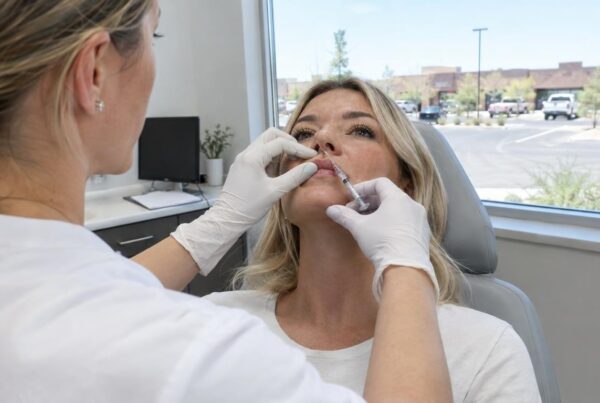
Treatment begins with a review of your goals and medical history, followed by consent and fine-needle injections into the planned areas. At Botox In Midland, an initial appointment generally takes 30 to 60 minutes, while follow-ups take about 15 minutes. Redness or mild swelling at the injection sites often settles in about 10 minutes, and small red bumps may last about 15 to 20 minutes; individual recovery varies. Most patients have little to no downtime.
Minor bruising can last up to a week. Tell us about the medicines and supplements you take, including aspirin, ibuprofen or other nonsteroidal anti-inflammatory drugs (NSAIDs), fish oil, and vitamin E. Alcohol may also increase bruising. Ask us before treatment whether you should avoid any of these, and do not stop a prescribed or medically necessary treatment without guidance from the clinician who manages it.
What is the 4 hour rule after Botox?
The commonly discussed “4 hour rule” means avoiding lying flat or pressing or rubbing the treated area for about 4 hours. The American Academy of Ophthalmology presents these as precautions a doctor may recommend, not as a universal FDA-mandated rule. Follow the specific aftercare instructions your injector gives you.
What’s the Downside to Botox for Crow’s Feet?
Botox can cause soreness, unevenness, or more reduction in facial expression than intended. The American Academy of Dermatology describes mild headache as uncommon and weakness of a nearby muscle causing a temporarily droopy brow or eyelid as rare. In the Botox Cosmetic lateral canthal-lines trials, the prescribing information reports eyelid edema (swelling) in 1% of Botox-treated patients and 0% of placebo-treated patients; these trial rates do not predict your individual risk. Botox Cosmetic carries a warning that toxin effects can spread and cause potentially life-threatening swallowing or breathing problems. The FDA’s Botox Cosmetic patient information reports no confirmed serious spread of toxin effects at the recommended dose for crow’s feet.
Who should avoid Botox injections near the eyes?
The prescribing information lists hypersensitivity to botulinum toxin or product ingredients and infection at a proposed injection site as contraindications. Neuromuscular disorders and pre-existing swallowing or breathing difficulties are important precautions, not additional contraindications: disclose them before treatment so we can assess your risk. At Botox In Midland, we also do not recommend treatment for people who are pregnant, trying to conceive, or breastfeeding; those are clinic recommendations, not additional label contraindications. Tell us about eye symptoms and all medicines you take, especially aminoglycoside antibiotics, other drugs that interfere with neuromuscular transmission, and muscle relaxants, which may intensify Botox’s effects. Do not stop a prescribed medicine without guidance from the clinician who manages it.
Eye-area effects deserve particular attention. The American Academy of Ophthalmology reports that a study of 58 women found reduced tear-film stability as early as one week after crow’s-feet injections, persisting for more than three months; tear production was lowest at one month. Seek urgent medical care if you develop trouble swallowing, speaking, or breathing after treatment.
What Happens After 10 Years of Botox?
Long-term Botox treatment does not permanently stop aging or ensure that crow’s feet disappear. With repeat treatment, the targeted muscle may thin and results may last longer for some people, but individual results vary. If injections stop, the temporary muscle-relaxing effect wears off and normal movement returns.
How Does Botox Compare With Other Ways to Address Eye Lines?
The cause of the line helps us decide which options to discuss. The American Society of Plastic Surgeons notes that some lines visible at rest may persist despite muscle relaxation and may prompt an assessment for dermal filler. We offer dermal fillers and can assess whether one is appropriate for a particular resting line near your eye.
| Approach | What it addresses | Limit |
|---|---|---|
| FDA-labeled crow’s-feet Botox | Lines caused by muscle movement | The softening is temporary. |
| Lower-dose “Baby Botox” approach | Movement-related lines when a different degree of softening is desired | A lighter effect may leave some smile lines visible. |
| Dermal filler assessment | Selected lines that remain visible at rest | Filler is not appropriate for every eye-area line or a guaranteed fix. |
| Sun protection and skin care | Sun-related skin concerns | They do not relax the muscles that produce dynamic crow’s feet. |

We discuss preventive Botox, sometimes called Baby Botox, for people concerned about dynamic wrinkles becoming more pronounced. For more context on the treatment area, see this educational overview of what Botox around the eyes can and cannot treat.
Frequently Asked Questions
Can Botox for crow’s feet get rid of under-eye bags?
No. Crow’s-feet Botox may soften wrinkles around the outer corners of your eyes, but it will not remove under-eye bags. The American Society of Plastic Surgeons notes that relaxing surrounding wrinkles can improve the area’s appearance without eliminating the bags themselves. We can discuss your specific concern during a consultation at Botox In Midland.
Can I wear makeup after crow’s-feet Botox?
Yes, you can generally apply makeup after treatment. The American Academy of Dermatology says makeup can be applied as soon as you leave the treatment room. Avoid pressing or rubbing the injection sites while applying it, and follow your injector’s instructions if you have redness, bruising, or other concerns.
Can I exercise after Botox around my eyes?
For strenuous exercise, the American Academy of Ophthalmology says a doctor may recommend waiting 24 to 48 hours after botulinum toxin treatment. That is a precaution your clinician may tailor to you, not a reason to avoid all normal daily activity.
Do crow’s-feet Botox injections hurt?
Crow’s-feet Botox injections usually cause only brief, mild discomfort. At Botox In Midland, we use a fine needle, and you can ask about a topical numbing cream if you are worried about pain. Small red bumps may appear afterward, and minor bruising is possible. Tell us if you have concerns about injections before treatment.
Will Botox for crow’s feet make my smile look frozen?
Not necessarily. The goal is to soften lines while preserving an expression that feels natural to you. The American Academy of Dermatology explains that targeted treatment can maintain natural facial expressions. However, Botox can limit movement more than intended, so tell your injector how much movement you want to keep.
What if my eyes feel dry or irritated after crow’s-feet Botox?
Contact us if you develop new or worsening dry eyes, eye irritation, light sensitivity, or vision changes after treatment. We can assess your symptoms and advise you on next steps; a clinician may recommend eye drops or ointment when appropriate.
Where Can Lamesa Patients Discuss Crow’s-Feet Results?
Botox In Midland is located in Midland, Texas, for patients traveling from Lamesa, Texas.
If you are considering treatment, get in touch with Botox In Midland – MedSpa to arrange a professional consultation with Dr. Gibson and discuss your goals in person.
This information is general and is not medical advice. Talk to a licensed clinician about your own situation before making a treatment decision.