Last updated: August 31, 2026
RHA fillers represent a landmark 52-week clinical study reshaping how providers approach dynamic facial lines. Resilient hyaluronic acid fillers now have rigorous evidence supporting their use in one of the most challenging treatment areas – the mouth and lip region, where wrinkles form and deepen with every smile, speak, and expression. For patients in Midland, Odessa, and the broader Permian Basin, this research offers something valuable: confidence that a filler specifically designed for dynamic areas can deliver lasting, natural-looking correction backed by the highest standards of clinical evidence.
What Did the 52-Week RHA Filler Study Prove About Safety and Efficacy?
What Makes the Study Design Reliable for Patients?
By following patients for a full 52 weeks, researchers captured how the filler performed through multiple facial movement cycles and seasonal changes, providing durability data that shorter studies cannot offer. The multicenter approach across several sites also suggests consistent outcomes across different clinical environments and practitioner techniques, which matters for patients seeking treatment in any setting.
What Specific Wrinkle Areas Did the Study Target?
The study focused specifically on dynamic perioral rhytides – the wrinkles that form around the mouth during movement, including vertical lip lines, oral commissure folds, and the creases that appear when speaking, eating, or expressing emotion. This region is particularly challenging because the skin must stretch and compress thousands of times daily, and conventional fillers often feel stiff or look unnatural during animation. The precise targeting of this area means the efficacy data applies directly to the concerns Midland patients most frequently ask about.
How Do RHA Fillers Work Differently for Dynamic Wrinkles?
Resilient hyaluronic acid technology represents a fundamental departure from conventional HA fillers. The proprietary processing creates a filler matrix that stretches and compresses with facial movement rather than remaining rigid, allowing the gel to move naturally when you speak, smile, or eat. This dynamic flexibility addresses a core limitation of traditional fillers, which can look smooth at rest but bunch or appear unnatural during animation.
What Is Resilient Hyaluronic Acid Technology?
RHA fillers use a gentler manufacturing process that preserves more of hyaluronic acid’s natural chain structure, resulting in a gel that more closely mimics the HA found in youthful skin. Where traditional fillers cross-link HA chains extensively to create volume, RHA technology maintains a balance that allows the gel to adapt to mechanical stress while still providing structural support. This means the filler integrates with dynamic tissue rather than fighting against it, a distinction that becomes especially apparent in high-movement areas like the perioral region.
Why Does Filler Flexibility Matter for Moving Areas?
Every facial expression – from a whispered conversation to a hearty laugh – involves the perioral skin stretching, compressing, and sliding in complex patterns. A rigid filler in this area creates an unnatural feel and appearance, sometimes called “pillow face” or the telltale sign of “too much filler.” Flexible RHA fillers move with the skin rather than against it, preserving natural facial expressiveness while still providing the volume correction patients seek. This technology opens new possibilities for treating areas that previously required compromises between aesthetics and authenticity.
What Types of Dynamic Perioral Wrinkles Can RHA Fillers Address?
The 52-week study validated RHA filler efficacy for moderate-to-severe dynamic perioral rhytides, encompassing the specific wrinkle patterns that develop around the mouth from years of facial movement. The filler integrates naturally with dynamic tissue, providing correction that looks appropriate whether the face is at rest or animated with expression.
How Do RHA Fillers Treat Lip Lines and Smoker’s Lines?
Vertical lip lines, often called smoker’s lines despite appearing in non-smokers, form from repeated pursing of the lips during speaking, drinking through straws, and expressions. These fine creases frame the lips and often betray age before other areas show significant changes. RHA filler addresses these lines by adding subtle volume beneath the skin, smoothing the crepey appearance while maintaining the natural architecture needed for lip movement. The flexible gel moves naturally with the lips, avoiding the stiff, overfilled look that can occur with less adaptable fillers.
Can RHA Fillers Soften Marionette Lines and Smile Lines?
Marionette lines run vertically from the corners of the mouth toward the jawline, while nasolabial folds extend from the nose toward the mouth corners. Both areas involve dynamic tissue that must accommodate smiling, speaking, and eating. RHA fillers soften these creases by restoring volume that lifts and supports the overlying skin, reducing shadowing and depth without creating an unnatural bulge. The resilient properties ensure that results remain natural-looking throughout the full range of facial expressions, from a subtle smile to full laughter.
What Can Patients in Midland Expect During RHA Filler Treatment?
The RHA filler experience at a MedSpa follows a patient-centered process designed for comfort and confidence, beginning with a thorough consultation to understand individual goals and facial anatomy. Treatment involves precise injection technique tailored to the perioral region’s unique dynamics, with careful attention to maintaining natural facial movement after correction. You can learn more about comprehensive dermal fillers for facial restoration on our blog.

How Is the RHA Filler Procedure Performed?
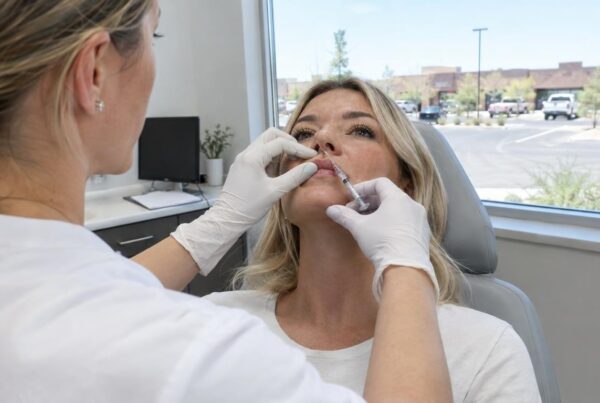
After cleansing the treatment area and potentially applying topical anesthetic, the provider maps the perioral region to identify optimal injection points that will address specific wrinkle patterns while preserving natural expression. The filler is injected in small amounts along the targeted wrinkles, with the provider assessing results dynamically – asking the patient to smile, speak, and move their mouth to ensure natural-looking correction. The entire procedure typically takes 15 to 30 minutes, and many patients report minimal discomfort due to the filler’s formulation and the provider’s technique.
What Does Recovery Look Like After RHA Treatment?
Recovery from RHA filler in the perioral area is typically straightforward, with most patients returning to normal activities immediately or within hours. Mild swelling, redness, or bruising at injection sites usually resolves within a few days. Unlike surgical procedures, there is no significant downtime required, and patients can apply makeup gently after 24 hours if desired. The provider will give specific aftercare instructions, which generally include avoiding intense heat, strenuous exercise, and excessive facial manipulation for a short period to allow the filler to settle optimally.
How Long Do RHA Filler Results Last for Dynamic Wrinkles?
Individual results vary based on several factors, but the study’s extended timeframe provides meaningful guidance for patients planning their aesthetic maintenance. Patients interested in comparing different RHA filler options for dynamic volume can explore our detailed guides.
What Factors Influence RHA Filler Duration?
Filler longevity depends on individual metabolism, the specific perioral area treated, the volume of filler injected, and lifestyle factors such as sun exposure and skincare habits. Patients with faster metabolisms may notice gradual softening of results sooner, while others enjoy prolonged correction. Treatment of deeper wrinkles may require more filler initially, potentially affecting how long perfect correction persists. Providers can offer personalized guidance based on individual assessment and previous treatment response.
How Do RHA Results Compare to Other Dermal Fillers?
RHA fillers are specifically engineered for dynamic areas, which means they often outperform traditional fillers in high-movement regions like the perioral zone. Conventional HA fillers can break down faster in areas of repeated compression and stretching, while RHA technology maintains its structural integrity through facial movement. For patients who have tried other fillers and noticed results fading quickly in the mouth area, RHA may offer a meaningful improvement in longevity and natural appearance.
Risks, Side Effects and Who Is Not a Candidate
Like all injectable treatments, RHA fillers carry potential risks and side effects that patients should understand before proceeding. Common treatment responses include temporary swelling, bruising, redness, and tenderness at injection sites, typically resolving within days. More uncommon risks involve allergic reactions, infection, or vascular complications that require immediate medical attention.
Patients with severe allergies, particularly to hyaluronic acid products or lidocaine, should avoid RHA fillers. Those with active skin infections near the treatment area or certain autoimmune conditions should discuss their history with a qualified provider before treatment. Pregnant or breastfeeding individuals are generally advised to postpone elective filler procedures. The best way to determine whether RHA fillers suit your situation is a personal consultation where your provider can review your medical history and aesthetic goals. Discuss any concerns openly with your clinician – understanding both benefits and risks leads to the most satisfying outcomes.
For West Texas patients interested in learning whether RHA fillers can address their specific perioral concerns, Botox In Midland offers consultations with Dr. Gibson and the clinical team. The practice serves patients throughout the Permian Basin, including Midland, Odessa, Andrews, Big Spring, and surrounding communities, providing personalized assessments of how resilient hyaluronic acid fillers might complement other facial rejuvenation approaches. Contact Botox In Midland to schedule your consultation and explore what the latest clinical evidence and expert technique can achieve for your goals.
Frequently Asked Questions
What did the 52-week RHA filler study prove about safety and efficacy?
Published in Dermatologic Surgery in 2022, the research confirmed that RHA filler maintained both efficacy and tolerability across all Fitzpatrick phototypes throughout the full 52-week observation period.
How long do RHA filler results last for dynamic wrinkles?
Individual results vary based on metabolism, treated area, filler volume, and lifestyle factors. Patients with faster metabolisms may notice gradual softening sooner, while others enjoy prolonged correction.
How do RHA fillers work differently for dynamic wrinkles?
RHA fillers use a gentler manufacturing process that preserves more of hyaluronic acid’s natural chain structure. The gel stretches and compresses with facial movement rather than remaining rigid, allowing natural animation when speaking, smiling, or eating. This addresses a core limitation of traditional fillers, which can look unnatural during facial expressions.
What can patients expect during RHA filler treatment?
Treatment begins with a thorough consultation to understand individual goals and facial anatomy. The provider maps the perioral region and injects small amounts of filler along targeted wrinkles. The provider assesses results dynamically by asking patients to smile, speak, and move their mouth. The entire procedure typically takes 15 to 30 minutes with minimal discomfort.
What types of dynamic wrinkles around the mouth can RHA fillers address?
RHA fillers effectively treat moderate-to-severe dynamic perioral rhytides including vertical lip lines, smoker’s lines, marionette lines running from mouth corners to the jawline, and nasolabial folds extending from the nose to the mouth. The resilient properties ensure natural-looking results whether the face is at rest or animated with expression.
What is recovery like after RHA filler treatment?
Recovery from RHA filler in the perioral area is typically straightforward, with most patients returning to normal activities immediately or within hours. Mild swelling, redness, or bruising at injection sites usually resolves within a few days. Patients should avoid intense heat, strenuous exercise, and excessive facial manipulation briefly to allow the filler to settle optimally.
Who should not receive RHA filler treatment?
Patients with severe allergies to hyaluronic acid products or lidocaine should avoid RHA fillers. Those with active skin infections near the treatment area or certain autoimmune conditions should discuss their history with a provider first. Pregnant or breastfeeding individuals are generally advised to postpone elective filler procedures. A consultation allows personalized assessment.
Related reading
- Dermal Fillers: Your Complete Guide to Facial Restoration
- Restylane: Your Complete Guide to This Popular Dermal Filler
- JUVÉDERM in Midland, Texas: Why the #1 Dermal Filler Collection Leads