Last updated: September 21, 2026
For patients in Midland, Texas and surrounding West Texas communities seeking evidence-based information about RHA fillers, understanding what this research means helps inform treatment decisions about natural-looking cheek augmentation.
What Is the New RHA Redensity Clinical Trial Studying?
The study listed as NCT06074302 on ClinicalTrials.gov evaluated Resilient Hyaluronic Acid (RHA) Redensity for improvement of radial cheek lines. This single-site trial enrolled 20 participants and ran from November 2023 through November 2024 under the lead sponsorship of Main Line Center for Laser Surgery. The research assessed how effectively RHA Redensity addresses radial cheek lines, adding clinical data specific to midface applications.
What Are Radial Cheek Lines and Why Do They Matter?
Radial cheek lines are wrinkles that fan outward from the outer cheek area, becoming more visible during smiling and other facial expressions. Unlike static lines that remain visible at rest, these dynamic lines change with facial movement. The midface region experiences constant motion from expressions, making it a challenging area for traditional fillers that may look natural at rest but appear stiff during movement. RHA fillers were specifically developed to address this limitation in dynamic facial areas.
How Does the NCT06074302 Study Evaluate RHA Efficacy?
The trial used standardized assessment measures to evaluate improvement in radial cheek lines after treatment with RHA Redensity. Researchers tracked both the appearance of lines at rest and during facial animation to capture how well the filler maintained natural results across different expressions. Safety monitoring occurred throughout the study period, documenting any adverse events among the 20 enrolled participants.
What Does the Peer-Reviewed Research Say About RHA Fillers?
Kaufman-Janette et al. (2019) conducted pivotal research supporting FDA approval of RHA2 and RHA3 for correction of moderate-to-severe dynamic facial lines. This peer-reviewed evidence demonstrates the scientific foundation for using RHA fillers in high-movement facial regions.

How Did the Kaufman-Janette Study Support FDA Approval?
The research evaluated 171 participants across multiple treatment sessions, measuring wrinkle severity using validated scales. Results showed significant improvement in dynamic lines with RHA2 and RHA3 formulations.
What Makes RHA Fillers Suitable for Dynamic Facial Areas?
RHA fillers use a manufacturing process that preserves more of the hyaluronic acid’s natural structure compared to traditional cross-linked fillers. This design allows the filler to move more naturally with facial tissues during expressions. Patients seeking comprehensive facial rejuvenation can explore available treatment options including RHA fillers, which provide consistent natural-looking results both at rest and during smiling.
How Do RHA Fillers Work for Cheek Augmentation?
RHA fillers integrate with facial tissues in a way that accommodates constant movement, making them suitable for cheek augmentation where expressions create ongoing motion. The resilient hyaluronic acid technology allows the filler to compress and expand with cheek movement while maintaining volume and smooth appearance. This adaptive quality addresses a common concern with traditional fillers in the midface.

What Is the Midface and Why Does It Need Special Consideration?
The midface encompasses the cheeks, under-eye area, and surrounding regions that form the central portion of facial structure. This area presents unique challenges because it experiences constant movement from smiling, talking, and other expressions while simultaneously supporting facial volume that diminishes with age. Fillers used here must balance volume restoration with the flexibility needed for natural movement, a consideration that shaped RHA filler development.
How Does RHA Adapt to Facial Movement?
The RHA formulation allows the filler to stretch and compress without breaking down prematurely or creating unnatural contours during facial expressions. Patients seeking cheek augmentation with RHA fillers benefit from results that look smooth whether the face is animated or at rest. This adaptive quality stems from the specific cross-linking technology used in resilient hyaluronic acid products.
What Areas Beyond Cheeks Can RHA Fillers Treat?
While cheek augmentation represents a primary application, RHA fillers address multiple facial areas where natural movement matters. The same properties that make RHA effective for cheeks apply to other dynamic regions including the perioral area, marionette lines, and forehead. Understanding the full range of RHA applications helps patients discuss comprehensive treatment plans with their providers. Patients interested in other filler options can review our complete guide to dermal fillers.
Can RHA Fillers Address Forehead and Frown Lines?
The forehead and glabellar frown lines respond well to RHA filler treatment because these areas undergo significant movement from eyebrow expressions and forehead wrinkling. Practitioners treating forehead wrinkles and frown lines with RHA fillers aim to soften lines while preserving natural facial expressiveness. Patients considering treatment for these areas should discuss goals with an experienced injector.
How Do RHA Fillers Work for Marionette Lines and Lip Areas?
Marionette lines extending from the corners of the mouth benefit from RHA filler treatment that maintains smoothness during speaking and eating. Lip areas present particular challenges because they move constantly during conversation and expression, and lip augmentation requires fillers that feel natural. RHA Redensity offers options specifically formulated for the delicate perioral region.
What Should Patients Expect During RHA Filler Treatment?
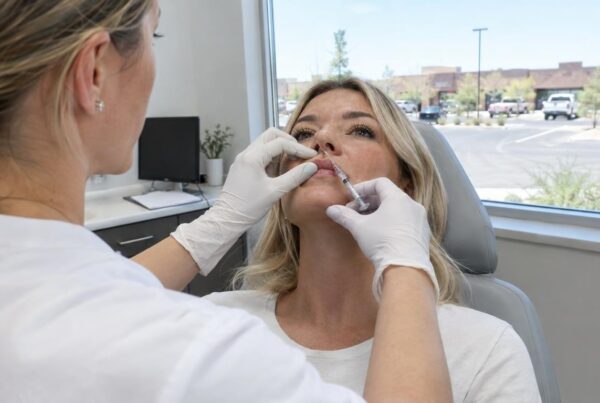
RHA filler treatment involves a straightforward office procedure where the provider maps injection sites and administers the filler using fine needles or cannulas. Most patients find the process comfortable with topical numbing and the lidocaine already included in RHA formulations. Understanding what happens during treatment helps patients prepare for their appointment and know what to expect.
How Long Does an RHA Filler Session Take?
A typical RHA filler session for cheek augmentation takes 30 to 45 minutes depending on the areas treated and the amount of filler needed. The consultation and marking phase adds additional time before injections begin. Patients can often complete treatment during a lunch break and return to regular activities afterward.
What Is the Recovery Process Like After RHA Injections?
Recovery from RHA filler treatment is generally minimal, with most patients resuming normal activities immediately. Temporary effects may include mild redness, swelling, or bruising at injection sites that typically resolve within a few days. Cold compresses and avoiding strenuous exercise for 24 hours support comfortable recovery.
Risks, Side Effects and Who Is Not a Candidate
All dermal fillers carry potential risks including bruising, swelling, infection, and rare vascular complications. Common side effects include temporary redness, tenderness, and firmness at injection sites. RHA fillers should not be used in patients with severe allergies, bleeding disorders, or active skin infections. Pregnant or breastfeeding patients should defer treatment. Patients with a history of adverse reactions to hyaluronic acid fillers should discuss alternatives with their provider. Discuss your complete medical history with a qualified practitioner before treatment.
For patients in Midland, Texas and surrounding West Texas communities including Odessa, Big Spring, Stanton, and Andrews, evidence-based information about RHA fillers supports informed decisions about treatment.
If you are considering RHA filler treatment for natural-looking cheek augmentation or other facial areas, schedule a consultation at Botox In Midland. Dr. Gibson and the team provide personalized assessments and treatment planning based on individual goals and facial anatomy. Contact the office to learn whether RHA fillers may be appropriate for your needs.
Frequently Asked Questions
What does the new RHA Redensity clinical trial study?
The NCT06074302 clinical trial evaluates RHA Redensity for improvement of radial cheek lines. This single-site study enrolled 20 participants and ran from November 2023 through November 2024 under Main Line Center for Laser Surgery sponsorship. The research assessed how effectively RHA Redensity addresses radial cheek lines, adding clinical data specific to midface applications.
What are radial cheek lines and why do they need special treatment?
Radial cheek lines are wrinkles that fan outward from the outer cheek area, becoming more visible during smiling and facial expressions. Unlike static lines, these dynamic lines change with facial movement. The midface experiences constant motion, making it challenging for traditional fillers that may look natural at rest but appear stiff during movement. RHA fillers were specifically developed to address this limitation.
How long does an RHA filler session for cheek augmentation take?
A typical RHA filler session for cheek augmentation takes 30 to 45 minutes depending on areas treated and filler amount needed. The consultation and marking phase adds additional time before injections begin. Most patients can complete treatment during a lunch break and return to regular activities afterward.
What is the recovery process after RHA cheek filler injections?
Recovery from RHA filler treatment is generally minimal, with most patients resuming normal activities immediately. Temporary effects may include mild redness, swelling, or bruising at injection sites that typically resolve within a few days. Cold compresses and avoiding strenuous exercise for 24 hours support comfortable recovery.
How do RHA fillers adapt to facial movement?
RHA fillers use a manufacturing process that preserves more of the hyaluronic acid’s natural structure compared to traditional cross-linked fillers. This design allows the filler to compress and expand with facial expressions without breaking down prematurely or creating unnatural contours. The resilient technology maintains smooth, natural-looking results both at rest and during animation.
What does peer-reviewed research say about RHA filler effectiveness?
Kaufman-Janette et al. (2019) conducted pivotal research supporting FDA approval of RHA2 and RHA3 for correction of moderate-to-severe dynamic facial lines. Results showed significant improvement in dynamic lines, demonstrating that RHA fillers provide effective correction while maintaining natural movement.
What facial areas beyond cheeks can RHA fillers treat?
RHA fillers address multiple facial areas where natural movement matters, including the perioral area, marionette lines, and forehead. Marionette lines extending from mouth corners benefit from RHA treatment that maintains smoothness during speaking and eating. Lip areas also respond well because they require fillers that feel natural during constant movement and expression.
This article is general information and is not medical advice. Talk to a licensed clinician about your own situation before making a treatment decision.